
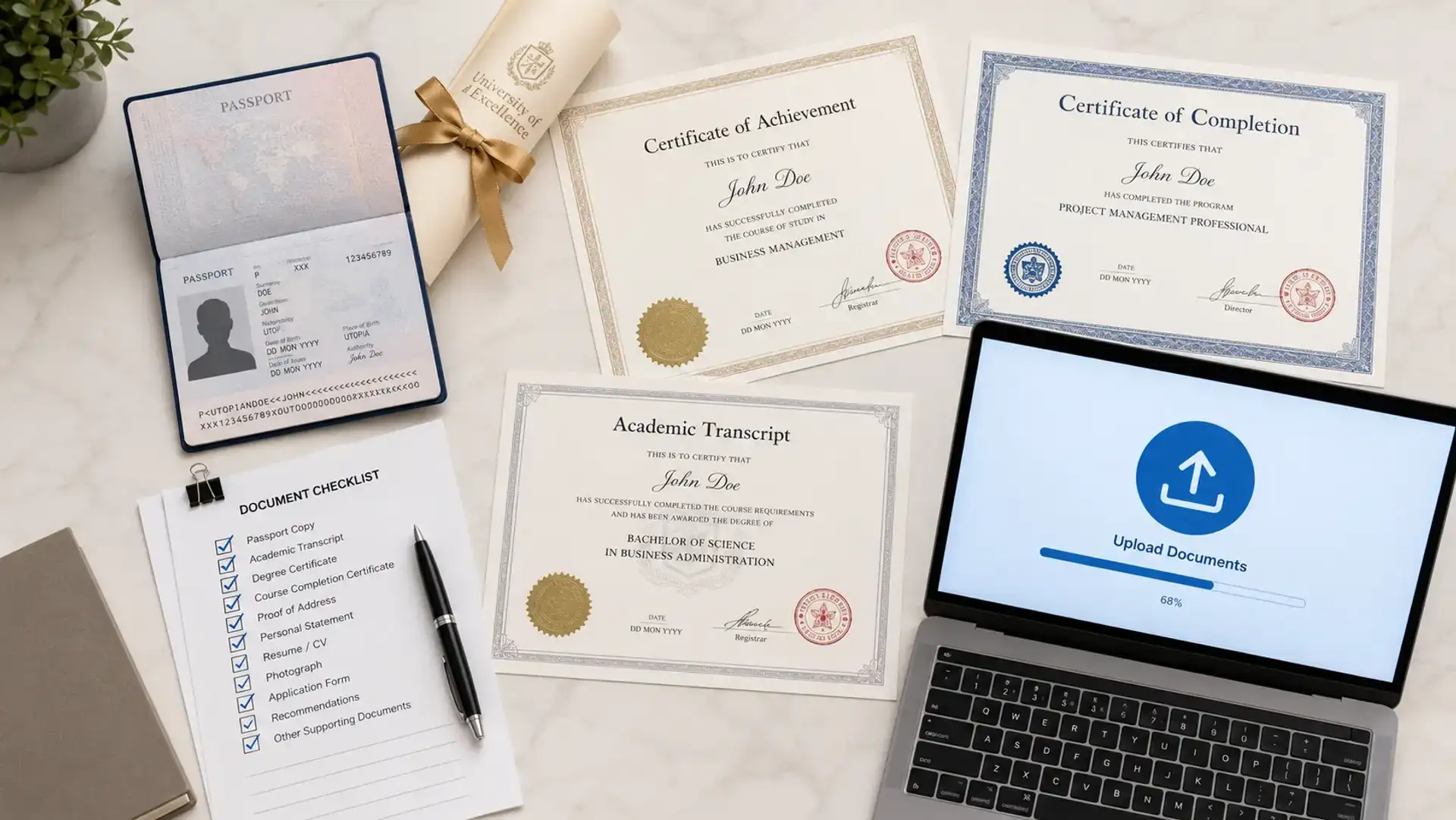
ADC Document Verification: The Complete Checklist (and What You Can Do Yourself)
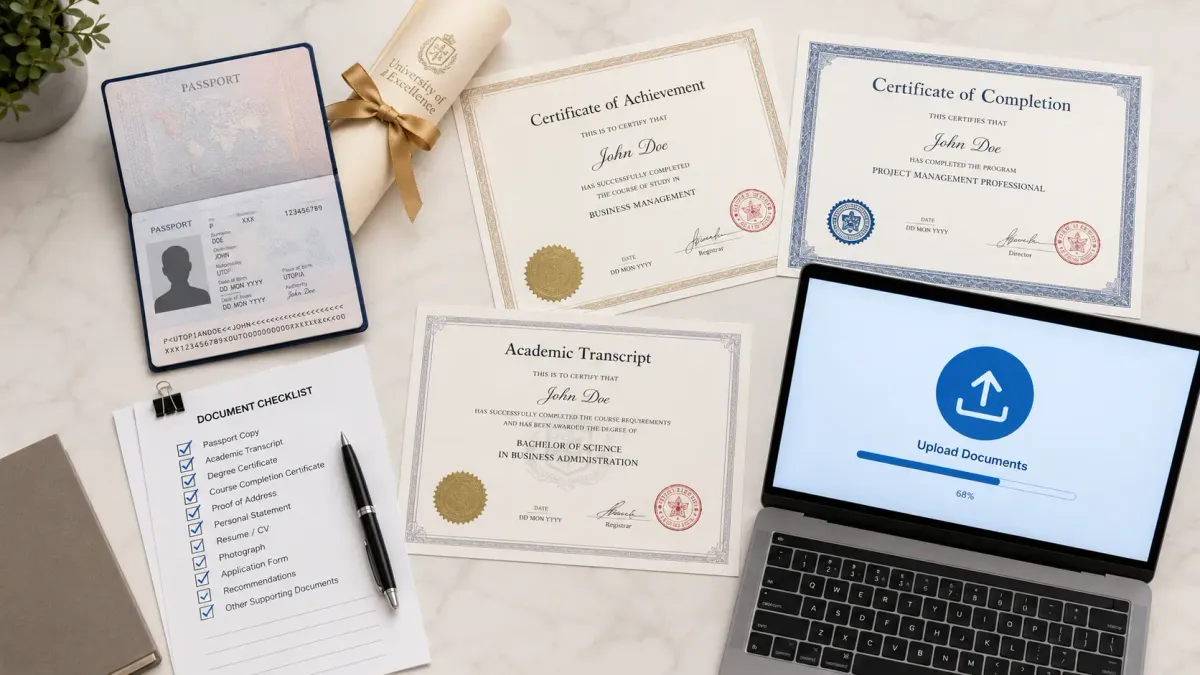
One of the most common messages we receive is also one of the shortest: “Can you send me the listed requirements for the initial assessment? Documents, I mean.”
So here it is — the full list, in plain language, with the practical detail behind each item that the official checklist assumes you already know. This is written for a candidate at the very beginning: you have decided to attempt the ADC, and the first gate is getting your documents verified.
Two ground rules before the list. First, the official checklist lives at adc.org.au and is updated periodically — download it and treat it as final; this article is the explanation layer on top. Second, and worth saying plainly: you submit these documents yourself, online, through the ADC’s portal (ADC Connect). The process is designed for candidates to do on their own. Some people use consultants for convenience, and that is a personal choice — but there is no requirement to, and no advantage a consultant has over a careful candidate with a complete file.
What “document verification” actually is
The ADC calls this stage the initial assessment. You upload your documents to ADC Connect, pay the fee (around AUD 650 — check the current amount), and the ADC verifies your qualifications and registration to decide whether you are eligible to sit the written exam. There is no test at this stage. Processing takes roughly eight weeks from the point your file is complete — a phrase that matters, as you will see.
The checklist
1. Passport (bio page)
Your current, valid passport — the photo page. Straightforward, with one giant exception that gets its own section below: the name on it must match your other documents.
2. Dental degree certificate
Your BDS (or equivalent) degree certificate — the final degree, not the provisional certificate, wherever the final one has been issued. If your university has only issued you a provisional certificate so far, apply to the university for the final degree now; this is one of the slowest documents to obtain in India and several other countries.
3. Complete academic transcripts
Marks sheets or transcripts covering every year of your dental program — not a summary, not the final-year marks alone. If your university issues a consolidated transcript, that is usually ideal. Request more copies than you need; you will use them again later in your career.
4. Internship completion certificate
Where your country requires an internship for registration — as India, Sri Lanka, Bangladesh, the Philippines and many others do — you need evidence you completed it. The standard internship completion certificate from your college is what the ADC expects to see.
5. Dental council registration certificate
Evidence of your full, unrestricted registration as a dentist — your Dental Council of India state registration, DHA/MOH/HAAD licence, PRC licence, or your country’s equivalent. If you hold registration but it has lapsed, or you are registered in more than one place, read the next item carefully.
6. Registration history — from every body, ever
This is the item candidates most often get wrong. The ADC wants your registration history from every registration body you have ever been registered with — including that one year you were registered in another state, and the Gulf licence from a job you left five years ago. Sit down, list every registration you have ever held, and obtain evidence for each. Leaving one out because it seems irrelevant is a reliable way to add months of correspondence.
7. Certificates of good standing
Confirmation from your registration body (or bodies) that you are in good professional standing. Two practical notes: these are often issued slowly, and they usually have a short validity — so time your requests close to your application rather than months ahead.
8. Name-change evidence — if any document differs
Read this one twice, because it is the single most common cause of delay.
Every document above must show the same name, spelled the same way. Degree in your maiden name and passport in your married name? A different spelling on your registration? An initial expanded on one document and abbreviated on another — very common with South Indian names? Each mismatch needs legal name-change evidence — a legal change-of-name document or deed poll standard; a marriage certificate alone may not be sufficient.
Audit your documents for exact name matches before you upload anything. Five minutes with a highlighter here saves eight weeks of back-and-forth later.
9. Official English translations — if applicable
Any document not issued in English needs an official translation by an accredited translator, submitted together with the original-language document. Translations by you, a friend, or the clinic down the road do not qualify. For most Indian candidates this rarely arises (degrees and registrations are issued in English), but Gulf documents in Arabic and various regional-language certificates need this handled properly.
Format rules — small things that cause real rejections
Files must be .pdf, .jpeg, .jpg or .png, and every document must be clear and complete: no cropped edges, no glare across the official seal, no missing back pages where anything is printed on the back. Scan flat, at high resolution, and look at each file the way a stranger would — could someone who has never seen this document read every word and every stamp?
The timeline, honestly
Plan for two clocks:
- Your collection time: one to three months. Universities and councils in our part of the world move at their own pace, especially for graduates from years ago. Start requesting documents now, even if you plan to apply later.
- ADC processing: about eight weeks — from when your file is complete. Every query about a missing or unclear document adds a round trip. Candidates whose files are perfect on day one genuinely do get through in a single pass.
What to do while you wait
The eight-week processing window is prime time for a head start. Read our beginner’s guide to the whole ADC pathway if you have not already, look at the written exam study plan to understand what preparation looks like, and start sketching which exam sitting you are aiming for.
📲 WhatsApp: +61468434447 📧 info@lavanika.academy
Document requirements are set by the ADC and updated periodically. The official checklist at adc.org.au is the final word — verify against it before submitting.
Frequently asked questions
What documents does the ADC initial assessment require?
In broad terms: your passport bio page, dental degree certificate, complete academic transcripts, internship completion certificate where your country requires one, dental council registration certificate, your full registration history from every body you have ever registered with, certificates of good standing, and evidence of any name change. Confirm the current list with the ADC before submitting.
Do my documents need to be translated into English?
Yes — any document not issued in English requires an official English translation. Translation is one of the most common causes of delay, so start it early rather than after you have gathered everything else.
What is a certificate of good standing?
It is confirmation from a registration body that you are registered and have no disciplinary findings against you. You generally need one from every body you have been registered with, not only your current one, and they often carry an expiry period — so time the request carefully.
Why do ADC applications get delayed?
Almost always incomplete submissions. The ADC's approximately eight-week assessment clock starts only once your application is complete, so a single missing transcript or untranslated certificate can add months rather than days.
What if my name is different across documents?
You need documentary evidence linking the names — a marriage certificate, deed poll or equivalent. Name mismatches between a degree certificate and a passport are common and entirely resolvable, but only if you supply the linking evidence up front.
Originally published · Reviewed and updated
Exam rules and requirements are set by the Australian Dental Council and can change. Always confirm current requirements on the ADC website before relying on any date or fee quoted here.