
ADC Part 2 Exam: The Complete Guide for Overseas Dentists (2026)
You did it. You passed the ADC written exam. That is a huge achievement — and you should feel proud of it.
But now comes the next question: what exactly is the ADC Part 2, and how do you prepare for it?
At Lavanika Academy, we work with overseas dentists at every stage of the ADC journey. This guide will walk you through everything you need to know about the ADC Part 2 practical examination — in plain English, without the overwhelm.
What Is the ADC Part 2 Exam?
The ADC Part 2 is officially called the ADC Practical Examination. It is the final stage of the ADC assessment process for overseas-trained dentists.
Think of it this way:
- ADC Part 1 (Written Exam) — proves you know your dentistry
- ADC Part 2 (Practical Exam) — proves you can actually do it
The practical examination is the last stage of the dental practitioner assessment process. It is a platform for you to show that you are competent to practise safely as a dentist in Australia.
Once you pass Part 2, you receive your ADC certificate — your ticket to applying for registration with the Dental Board of Australia (DBA) and finally practising as a dentist in Australia.
Who Is Eligible to Sit Part 2?
To sit the ADC Part 2 exam, you must:
- Have a valid written examination pass — valid for five years from the date your result was notified
- Have a valid initial assessment up to the end of your examination date
- Not have sat, or be due to sit, a practical examination in the previous examination period
This is why passing Part 1 as early as possible matters — the five-year validity clock starts from the date you are notified of your written examination result, not the date you sat the exam. Use that time wisely.
When and Where Is the Exam Held?
The practical examination is held at an ADC-run facility, with ADC staff present at all examinations. The exam is conducted in Australia — candidates travel to the examination centre to sit it.
The practical examination fee is published on the ADC website and is reviewed periodically. Always check the current fee at adc.org.au/assessments/additional-information/fees before applying. Budget for travel and accommodation on top of the examination fee, particularly if you are coming from overseas.
How Is the ADC Part 2 Structured?
This is where it gets interesting — and where a lot of candidates get caught off guard because Part 2 is very different from the written exam.
The examination is held over two days: a technical skills day and a clinical skills day.
Let us break each day down.
Day 1 — Technical Skills Day
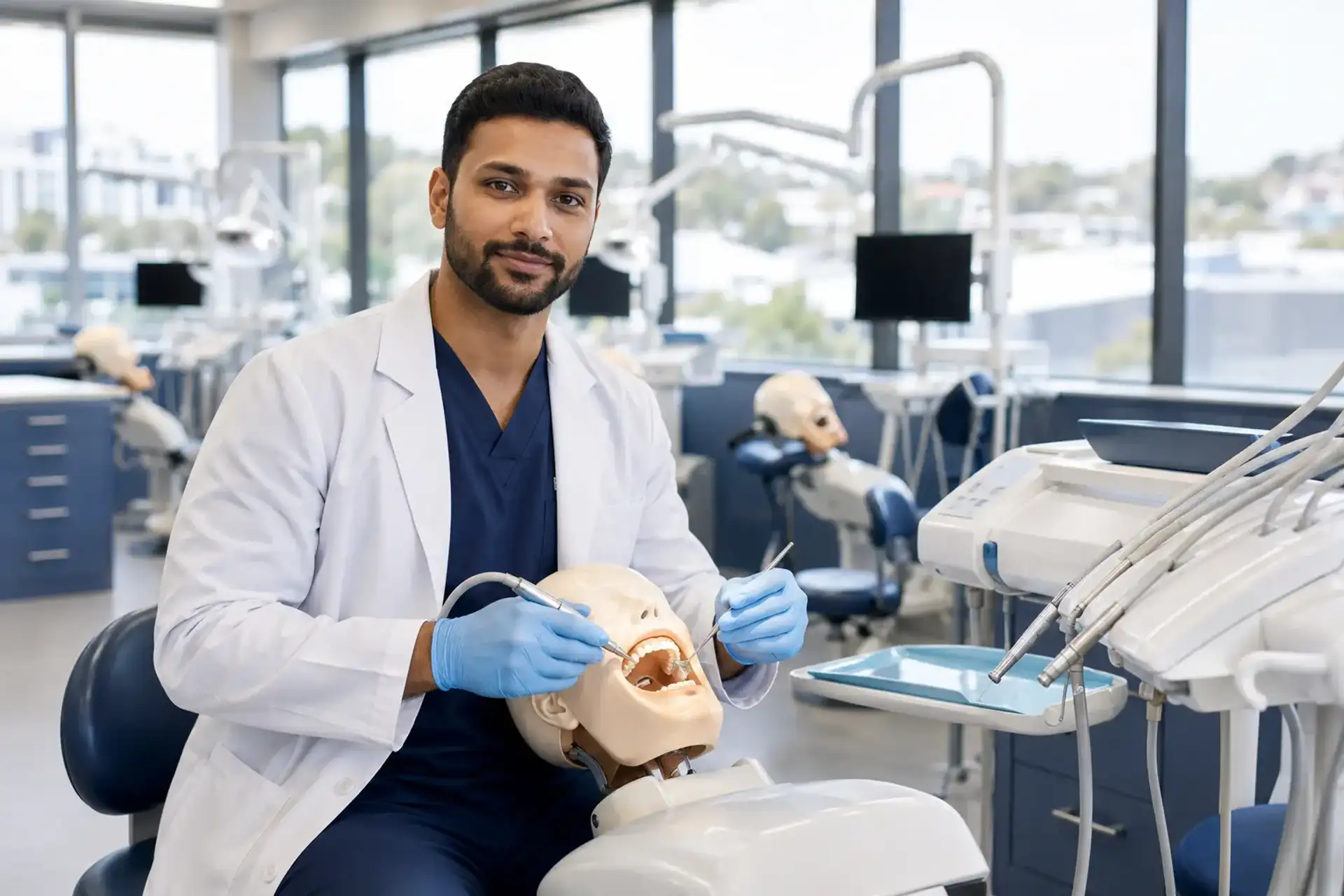
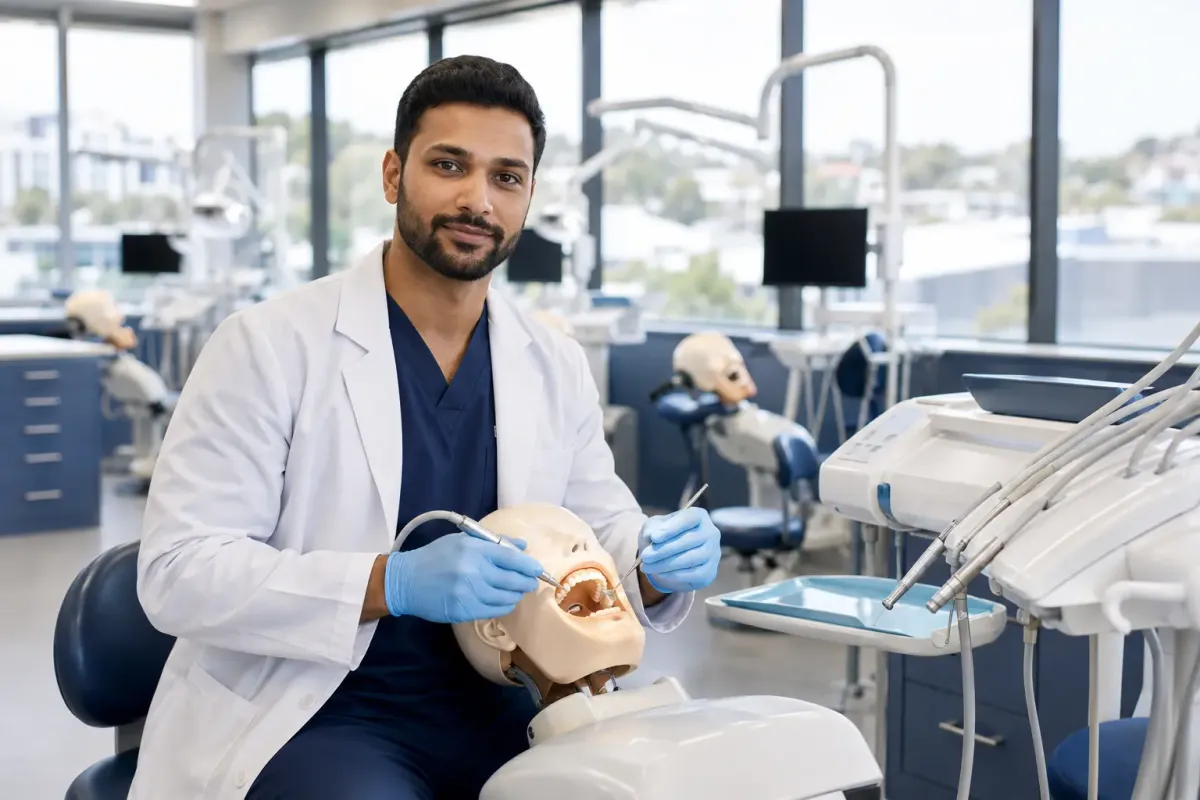
On the technical skills day, you work on dental manikins (simulated patients) to demonstrate your hands-on clinical skills.
Half the technical tasks will be restorative-based — placing a restoration — and half will be preparation-based, such as preparing a tooth to receive a restoration or other procedure. All tasks are relevant to contemporary practice in Australia and are designed to reflect the skills needed to manage common or important clinical situations.
Important update for Period 2, 2026 onwards: In line with the Minamata Convention on mercury and contemporary dental practice, the ADC has removed the amalgam placement task from practical examinations. All restorative tasks now use mercury-free materials. If you are sitting the exam from Period 2, 2026 onwards, ensure your preparation focuses on composite and other mercury-free restorative techniques only.
Also from Period 2, 2026, the ADC has introduced new “Platinum range” high-performance simulation teeth for the preparation and restoration tasks in the simulation clinic. These teeth are designed to deliver improved tactile feedback, uniform cutting response, and optimal aesthetics. If you are preparing for Period 2 onwards, familiarise yourself with these simulation teeth as part of your technical preparation. Updated guidance is available on the ADC website at adc.org.au.
This day is all about your hands. It tests whether you can actually perform dental procedures to the standard expected of a newly qualified dentist in Australia. Speed matters, but accuracy and technique matter more.
Breaks can be taken as desired throughout the technical skills day. The examination has been designed to provide sufficient time for you to take breaks throughout the day and you are encouraged to take regular breaks.
Day 2 — Clinical Skills Day (OSCE)
The second day is the OSCE — Objective Structured Clinical Examination.
The clinical skills day uses a 10-station OSCE format. Each station is set up as a separate room with a specific task related to a clinical scenario or skill. You move from one station to the next, with a set time limit for each.
Each station may involve different activities, such as interacting with simulated patients, performing tasks on manikins, or other related exercises. The exam takes half a day, and you will either be scheduled for a morning or an afternoon session.
When you enter each station, you will be given clear instructions and a brief period to read through them. You will be notified when it is time to start and stop.
At some stations, an assessor will be present to observe you directly. For other stations, you will complete tasks on your own, which will be evaluated afterward.
What Happens at Each OSCE Station?
Each station is set up in a designated room with a different task relating to a clinical scenario or clinical skill demonstration. Tasks may include the use of standardised simulated patients and procedures on manikins, among other related resources. All tasks will be relevant to contemporary practice in Australia and are designed to reflect the skills needed to manage common or important clinical situations.
Common types of OSCE stations in the ADC Part 2 include:
Communication stations — You interact with a standardised patient (a trained actor). You might need to take a history, explain a diagnosis, discuss treatment options, obtain informed consent, or manage a difficult patient conversation. These stations assess not just what you say but how you say it — your empathy, clarity, and professionalism as a dentist in the Australian context.
Clinical reasoning stations — You are given a clinical scenario, perhaps an X-ray, photos, or a patient history, and asked to formulate a diagnosis and management plan.
Procedure stations — You perform clinical tasks on manikins, demonstrating the correct technique and sequence.
How Is the OSCE Marked?
A candidate can receive one of five global rating grades for their overall task performance: outstanding, pass, borderline, fail, or bad fail.
Each station is assessed independently. This means a strong performance at one station does not automatically save you from a weak performance at another. Consistent competence across all stations is the goal.
When Do You Get Your Results?
Practical examination results will be released via ADC Connect approximately six weeks after your examination date.
After successfully completing the practical examination, you will be awarded an ADC certificate, which confirms your eligibility to apply for registration with the Dental Board of Australia.
What Makes ADC Part 2 Different from Part 1?
Many candidates who sailed through Part 1 find Part 2 unexpectedly challenging — not because they lack clinical skills, but because they underestimate how different this exam is.
Here is the key difference:
Part 1 tests what you know. You can study, revise, and practise MCQs from the comfort of your home.
Part 2 tests who you are as a clinician. It tests your hands, your communication, your professionalism, and your ability to think on your feet in real time under pressure.
You cannot prepare for Part 2 by reading textbooks alone. You need to practise — with real scenarios, real feedback, and real time pressure.
This is also where the Australian context becomes even more important. The examiners are not just looking for clinical competence — they are assessing whether you can practise safely and effectively as a dentist in Australia, with Australian patients, in the Australian healthcare system. How you communicate, how you handle consent, how you approach cultural sensitivity, and how you work within Australian professional standards all matter.
The Communication OSCE — Why It Deserves Special Attention
Of all the components of the ADC Part 2, the communication OSCE stations are the ones candidates most often feel underprepared for.
It is not enough to have the right clinical knowledge. You need to communicate that knowledge in a way that is clear, empathetic, patient-centred, and culturally appropriate for Australia.
Common scenarios in communication stations include:
- Breaking difficult news to a patient
- Explaining a treatment plan and obtaining informed consent
- Managing an anxious or reluctant patient
- Discussing the risks and benefits of treatment options
- Handling a complaint or concern from a patient
The language you use, your tone, your ability to check for understanding, and your genuine empathy are all being assessed. Candidates who have trained and practised outside Australia sometimes find that the communication style expected in Australian clinical settings feels different from what they are used to. This is normal — and it is exactly why structured practice with feedback from someone who understands the Australian context is so valuable.
At Lavanika Academy, communication OSCE preparation is at the heart of what we do. Dr Lavanika personally conducts all roleplay sessions, providing the kind of detailed, honest feedback that genuinely moves candidates forward.
How to Prepare for ADC Part 2
Start Early
Do not wait until you have your Part 1 results to start thinking about Part 2. As soon as you sit Part 1, begin familiarising yourself with the Part 2 format. If you pass Part 1, you want to be ready to move quickly.
Read the Official Handbook
The ADC publishes a Practical Examination Handbook for dentists, available at adc.org.au. This is your bible for Part 2. Read it thoroughly. Understand the format, the marking criteria, and what is expected at each type of station.
Practise Your Technical Skills
Get hands-on practice with dental manikins. If you are in Australia, some dental schools and simulation labs offer access to facilities. Focus on the restorative and preparation tasks that are most commonly assessed, and practise until your technique is consistent and efficient.
Build Your Communication Skills
Practise OSCE scenarios with a partner, a mentor, or through a structured coaching program. The goal is not to memorise scripts — it is to develop a natural, confident, patient-centred communication style that you can adapt to any scenario.
Practise out loud. Practise under time pressure. Practise with someone who gives you real feedback, not just encouragement.
Understand Australian Clinical Standards
Study the Australian guidelines, professional standards, and ethical frameworks that govern dental practice in Australia. Understand concepts like informed consent in the Australian context, mandatory reporting obligations, infection control standards, and culturally safe practice.
Do Mock Exams
Nothing prepares you for the pressure of the real exam like a realistic mock. At Lavanika Academy, our mock OSCE sessions are designed to replicate the actual exam conditions as closely as possible — so when you walk into the real exam room, it feels familiar rather than frightening.
Common Reasons Candidates Struggle with Part 2
Underestimating communication stations — Many candidates focus heavily on technical and clinical preparation and do not invest enough time in communication skills. In the exam, communication stations can be the difference between passing and failing.
Not practising under time pressure — Reading about OSCE scenarios is very different from performing them in real time with a ticking clock. Time management is a skill that needs to be practised, not assumed.
Applying home country clinical standards — If you default to the clinical guidelines or patient interaction styles from your home country rather than Australian standards, examiners will notice.
Going in without enough mock practice — Candidates who have done multiple mock OSCEs with feedback consistently outperform those who have only self-studied. The feedback loop is essential.
Treating Part 2 like Part 1 — Part 2 is a completely different exam that requires a completely different preparation approach. The sooner you internalise this, the more effectively you will prepare.
After You Pass — What Comes Next?
Once you receive your ADC certificate, here is what happens:
- Apply to AHPRA — the Australian Health Practitioner Regulation Agency — for registration as a dentist in Australia
- Choose your registration type — general registration or provisional registration, depending on your circumstances
- Start looking for work — with your registration in hand, you can begin practising as a dentist in Australia
It is a moment many of our candidates describe as one of the most significant of their professional lives. Years of study, sacrifice, and determination finally paying off.
Frequently Asked Questions About ADC Part 2
How long after passing Part 1 can I sit Part 2? You have five years from passing the written examination to sit the practical examination.
How much does ADC Part 2 cost? The fee is reviewed periodically by the ADC. Always check the current fee at adc.org.au/assessments/additional-information/fees before applying. Budget for travel and accommodation in addition to the examination fee.
Where is ADC Part 2 held? At an ADC-run examination centre in Australia. You will need to travel to Australia to sit the exam.
How many OSCE stations are there? The clinical skills day involves a 10-station OSCE.
How long after the exam do I get my results? Results are released approximately six weeks after your examination date via ADC Connect.
What happens if I fail a station? You receive a result for the overall examination. Information about the grading process is available in the official ADC Practical Examination Handbook.
Can I prepare for Part 2 on my own? You can, but most successful candidates use structured coaching, particularly for communication OSCE preparation. The feedback you get from experienced coaches is difficult to replicate through self-study alone.
How Lavanika Academy Can Help
At Lavanika Academy, we specialise in helping overseas dentists prepare for both components of the ADC Part 2 — the communication OSCE and the technical skills assessment.
Communication OSCE Course — Dr Lavanika personally conducts all sessions and roleplays, giving you the detailed, honest feedback you need to genuinely improve. Sessions cover the full range of communication scenarios you can expect in the exam, with a strong focus on the Australian clinical context.
Skilled OSCE Course — A focused two-day onsite program covering the clinical skills and technical competencies assessed in Part 2.
Mini Mock — A shorter mock session to test your readiness and identify where to focus your remaining preparation time.
Communication OSCE Mock — A full mock examination replicating real exam conditions, with detailed feedback from Dr Lavanika.
Our candidates come from all over the world, and many of them tell us that what made the difference was not just the content we covered — it was the confidence they built through practising in a safe, supportive environment with someone who truly understood what the ADC examiners are looking for.
You Are Closer Than You Think
The ADC Part 2 is challenging. We will not pretend otherwise. But it is also absolutely achievable — and thousands of overseas dentists have walked this path before you and come out the other side as registered dentists practising in Australia.
The key is preparation. The right preparation, done the right way, with the right support.
If you are ready to start, we are ready to help.
Explore our ADC Part 2 preparation courses at lavanika.academy or reach us directly at info@lavanika.academy
This guide has been prepared by Lavanika Academy for educational purposes. For the most current official information on the ADC practical examination, always refer to the Australian Dental Council website at adc.org.au. Lavanika Academy is an independent preparation provider. The ADC does not recommend or endorse any proprietary or informal courses advertising as preparation for the practical examination.
Frequently asked questions
What is the ADC Part 2 examination?
Part 2 is the practical examination, sat after you pass the written examination. It runs across two days — a Technical Skills Day of hands-on procedural tasks and a Clinical Skills Day of OSCE stations — and assesses whether you can practise safely and competently as a newly qualified dentist in Australia.
Who is eligible to sit ADC Part 2?
Candidates who have passed the ADC written examination and remain within its validity period. Because places in each examination period are limited and application stages are announced in advance, eligibility and availability are two separate hurdles.
How is the ADC Part 2 OSCE marked?
Stations are marked against published criteria covering clinical reasoning, communication, professionalism and safety. Consult the ADC's own marking rubrics for the current criteria, since these are the documents your examiners work from.
How is Part 2 different from Part 1?
Part 1 tests applied knowledge on paper; Part 2 tests what you can do with your hands and with a patient in front of you, under time pressure. Candidates who prepare for Part 2 by reading rather than rehearsing are the ones most often surprised on the day.
When do Part 2 results come out?
Results are released via ADC Connect approximately six weeks after the examination. Confirm the current timeframe with the ADC for your examination period.
Originally published · Reviewed and updated
Exam rules and requirements are set by the Australian Dental Council and can change. Always confirm current requirements on the ADC website before relying on any date or fee quoted here.