
Understanding the Technical Skills Task in the ADC Practical Examination

🛠️ Technical Skills Task – What It Is & Why It Matters for the ADC Exam
Introduction
For overseas‑qualified dentists aiming to practise in Australia, the ADC Practical Examination represents a final and rigorous step. It is divided into two distinct days: the Technical Skills Day and the Clinical Skills Day.
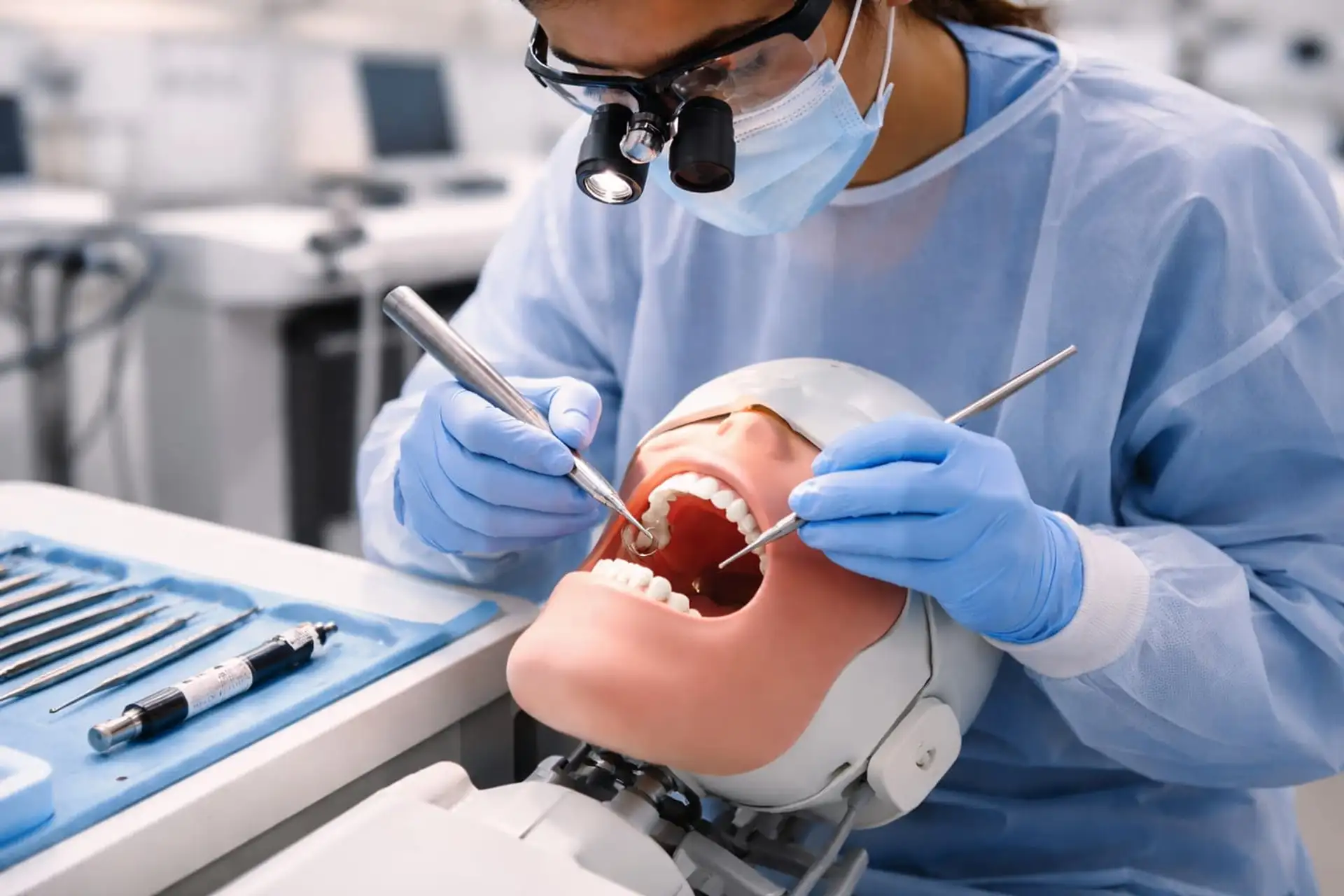
The Technical Skills Task refers to the set of procedural, hands‑on tasks you undertake on the Technical Skills Day, typically working on typodonts/manikins, designed to assess your competence in restorative and preparation‑based dental work.
What is the Technical Skills Task?
- It is a component of the Practical Examination where you demonstrate manual and procedural dental skills under timed conditions.
- On the Technical Skills Day, candidates are required to complete six tasks on pre‑prepared typodont models in manikin heads and simulation units.
- These tasks are drawn from two clusters:
- Preparation‑based tasks (e.g., preparing a tooth to receive a restoration or indirect restoration)
- Restoration‑based tasks (e.g., restoring a prepared tooth/teeth using composite, amalgam, or indirect restorations)
- The tasks are aligned with the ADC’s domain 6.3 Patient Care – Clinical Treatment and Evaluation of the professional competencies.
- These tasks reflect contemporary Australian dental practice and are designed to simulate common or important clinical situations.
Why It Matters
- The Technical Skills Day is irreducible: you must pass both the Technical Skills Day and the Clinical Skills Day to pass the Practical Examination. A strong performance on one does not compensate for failure on the other.
- These tasks assess your clinical confidence, technical precision, infection control adherence, time‑management and safe positioning in a simulated setting. Any weakness may compromise your outcome.
- As preparation for practice in Australia, the ADC needs to ensure you can perform safely, effectively and to standard in procedures you would meet in real dental practice.
What to Expect
- When you arrive at the Technical Skills Day you will receive a task list at the start of the session which outlines all the procedures you must complete, including details such as tooth numbers, surfaces and a designated practice tooth.
- You will be working in a simulation environment: manikin heads, typodonts, dental units. You may take breaks in the candidate lounge, but must complete all tasks within the allocated time.
- The marking uses both checklists and global rating scales. For each task you may receive one of five global ratings: outstanding, pass, borderline, fail or bad fail.
- Example tasks include:
- Preparation of a carious tooth/teeth
- Restoration of a prepared tooth/teeth with resin composite or amalgam
- Preparation and/or temporisation of a tooth/teeth to receive an indirect restoration
- An endodontic procedure
How to Prepare Effectively
- Practice using typodonts and manikins that mimic the ADC exam setup. Ensure you have the correct simulation units and dental instruments.
- Time yourself under exam‑like conditions: six tasks, manageable timing, replicate the real exam flow.
- Use a checklist inspired by the ADC blueprint: infection control, correct positioning, material handling, finishing and polishing, restoration quality, correct margins, occlusion and contacts.
- Familiarize yourself with the clusters: restoration‑based cluster and preparation‑based cluster. Ensure you balance your practice across both.
- Monitor common mistakes noted by the ADC: e.g., incorrect infection control, poor positioning, inadequate finish, failure to complete tasks.
- Review the “Five Tips for Your Upcoming Practical Examination” fact‑sheet from the ADC to support your preparation.
Summary
The Technical Skills Task in the ADC Practical Examination is a rigorous, simulation‑based assessment of your procedural competence as a dentist preparing to practise in Australia. It demands precise preparation work, restorations, time‑bound performance and exam‑level safe practice. A strong, balanced performance on this day is essential — matching it with clinical and communication excellence ensures overall success.
Sources
The examination structure, task clusters and assessment criteria described here are set by the Australian Dental Council. See the ADC’s practical examination information and its published exam materials, including the Five Tips for Your Upcoming Practical Examination fact sheet, on the ADC website.
The preparation advice and common-mistake observations in this article are Dr Lavanika’s, drawn from teaching overseas-trained dentists at Lavanika Academy — they are not ADC policy. Requirements change between examination periods, so confirm current details with the ADC before you rely on them.
Frequently asked questions
What is the ADC Technical Skills Task?
It is the set of hands-on procedural tasks you perform on the Technical Skills Day of the ADC practical examination, working on typodonts and manikins. The tasks assess restorative and preparation-based work — your technical precision, infection control, time management and safe positioning in a simulated clinical setting.
Do I have to pass both days of the ADC practical exam?
Yes. The practical examination is split across a Technical Skills Day and a Clinical Skills Day, and you must pass both. A strong performance on one day does not compensate for failing the other, so neither day can be treated as the one you will 'make up' later.
What tasks are covered on the Technical Skills Day?
Tasks fall into a restoration-based cluster and a preparation-based cluster, covering work such as composite restorations, provisional crowns, tooth reductions, approximal preparations and endodontic access. Balance your practice across both clusters rather than favouring the procedures you already enjoy.
Why do candidates fail the Technical Skills Day?
The common causes the ADC highlights are not exotic: incorrect infection control, poor patient and operator positioning, inadequate finishing, and simply not completing the task in the time allowed. In our teaching experience, running out of time is the single most avoidable failure, and only timed practice fixes it.
How should I practise for the Technical Skills Task?
Practise on typodonts and manikins that match the exam setup, and rehearse under the real time limits rather than open-endedly. Work to a checklist covering infection control, positioning, material handling, margins, contacts, occlusion and finish — and get someone experienced to mark your work against ADC criteria, because self-assessment tends to be generous.
Originally published · Reviewed and updated
Exam rules and requirements are set by the Australian Dental Council and can change. Always confirm current requirements on the ADC website before relying on any date or fee quoted here.